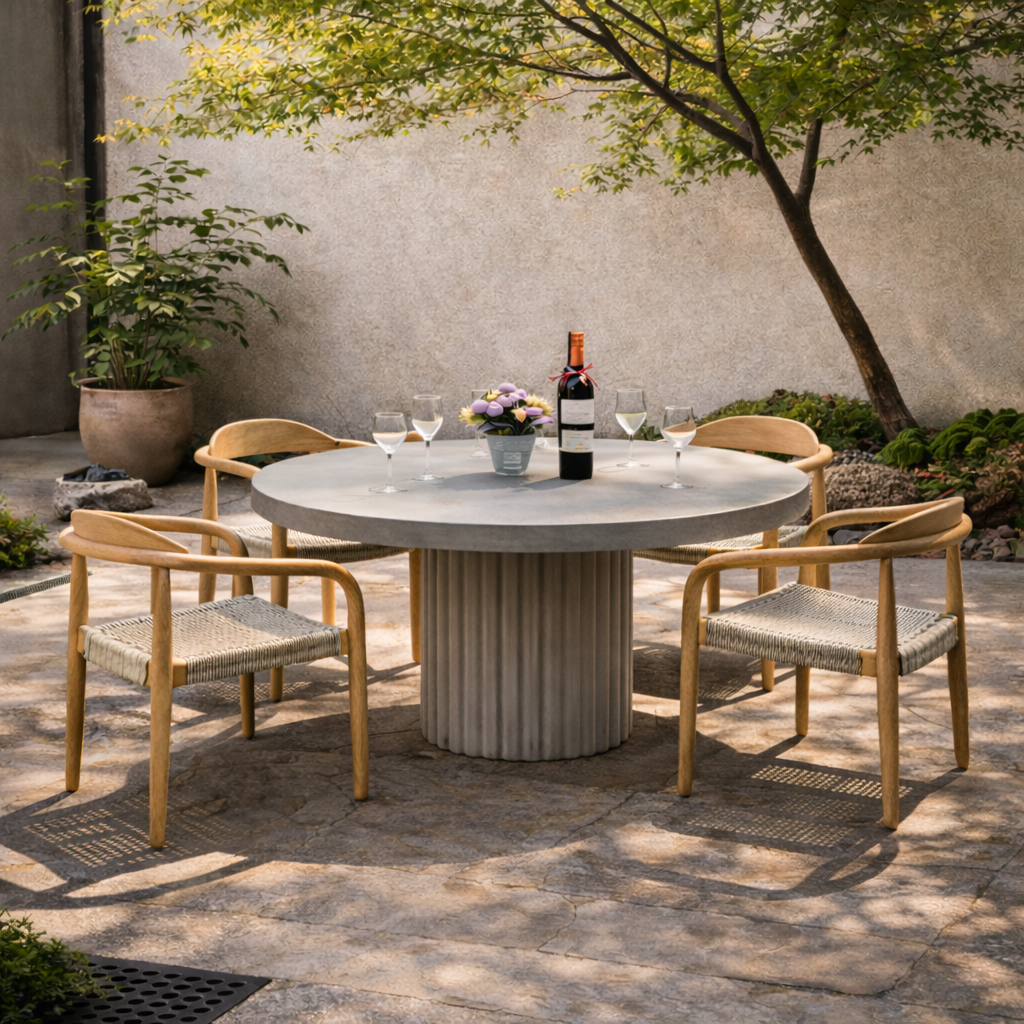
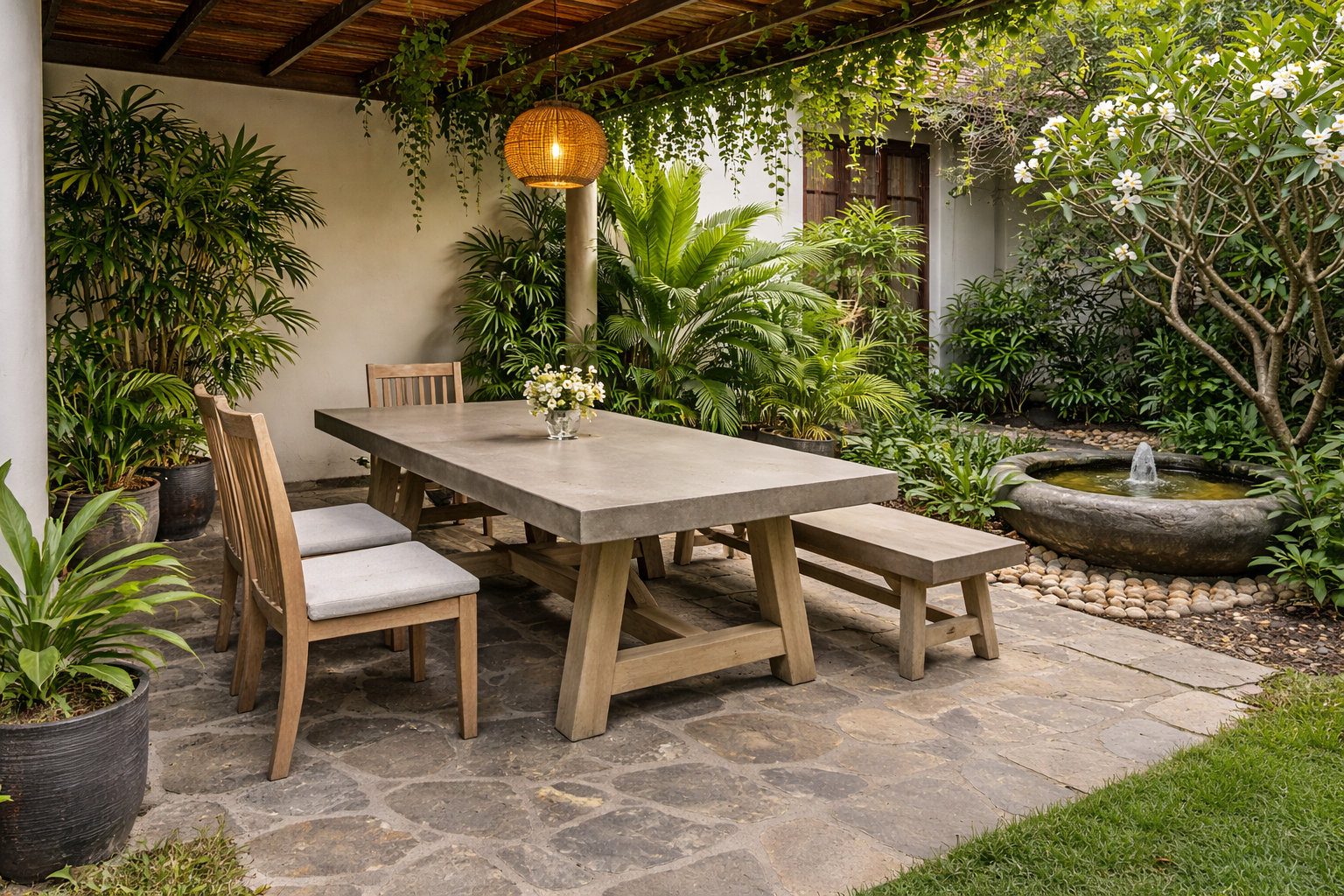
Outdoor furniture is exposed to three constant stress factors: water, UV exposure, and humidity. Over time, these conditions affect both appearance and long-term performance.
That is why material selection matters.
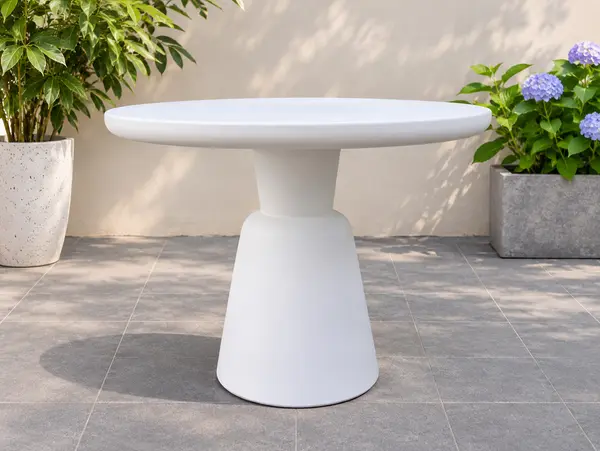
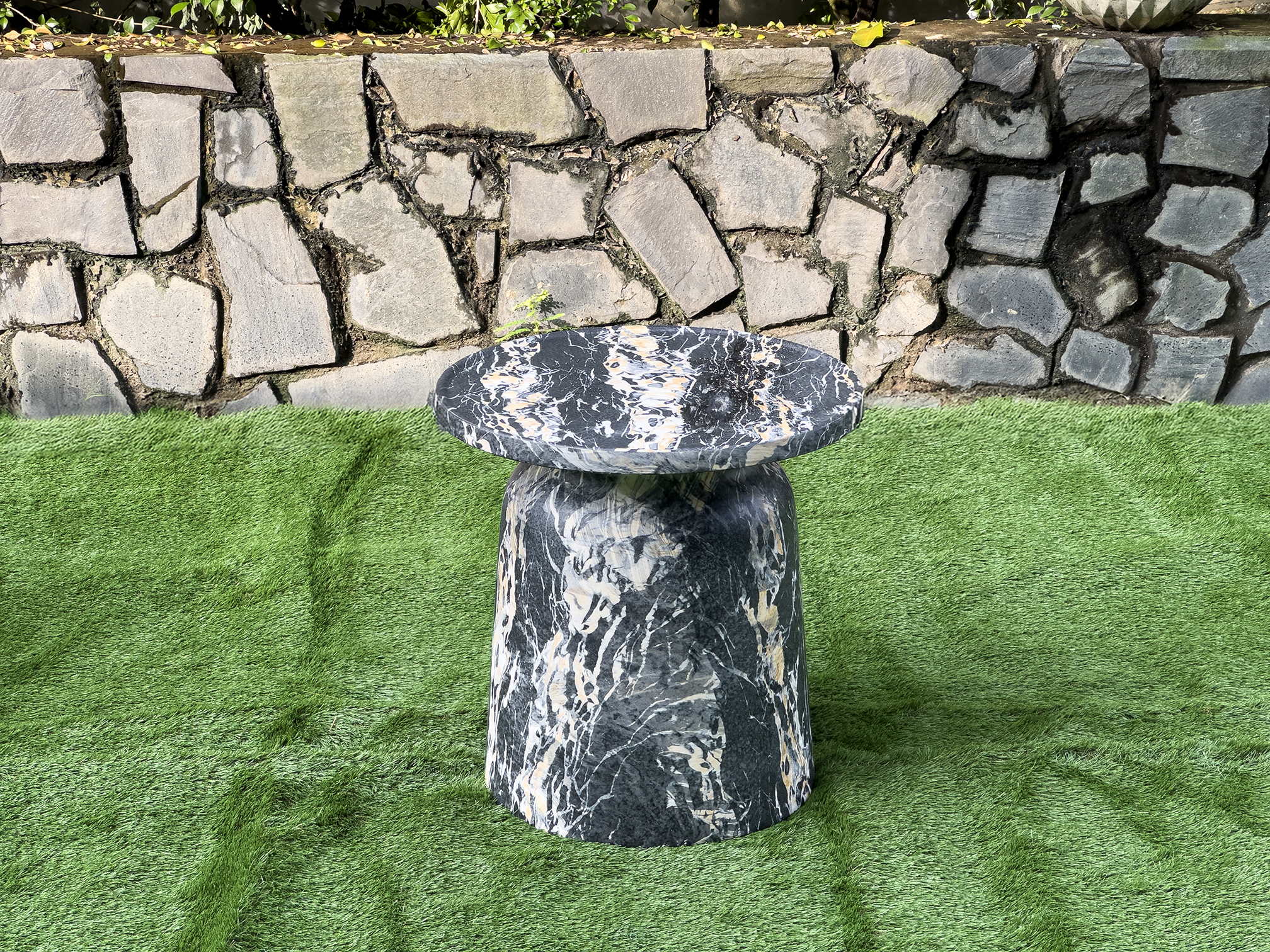
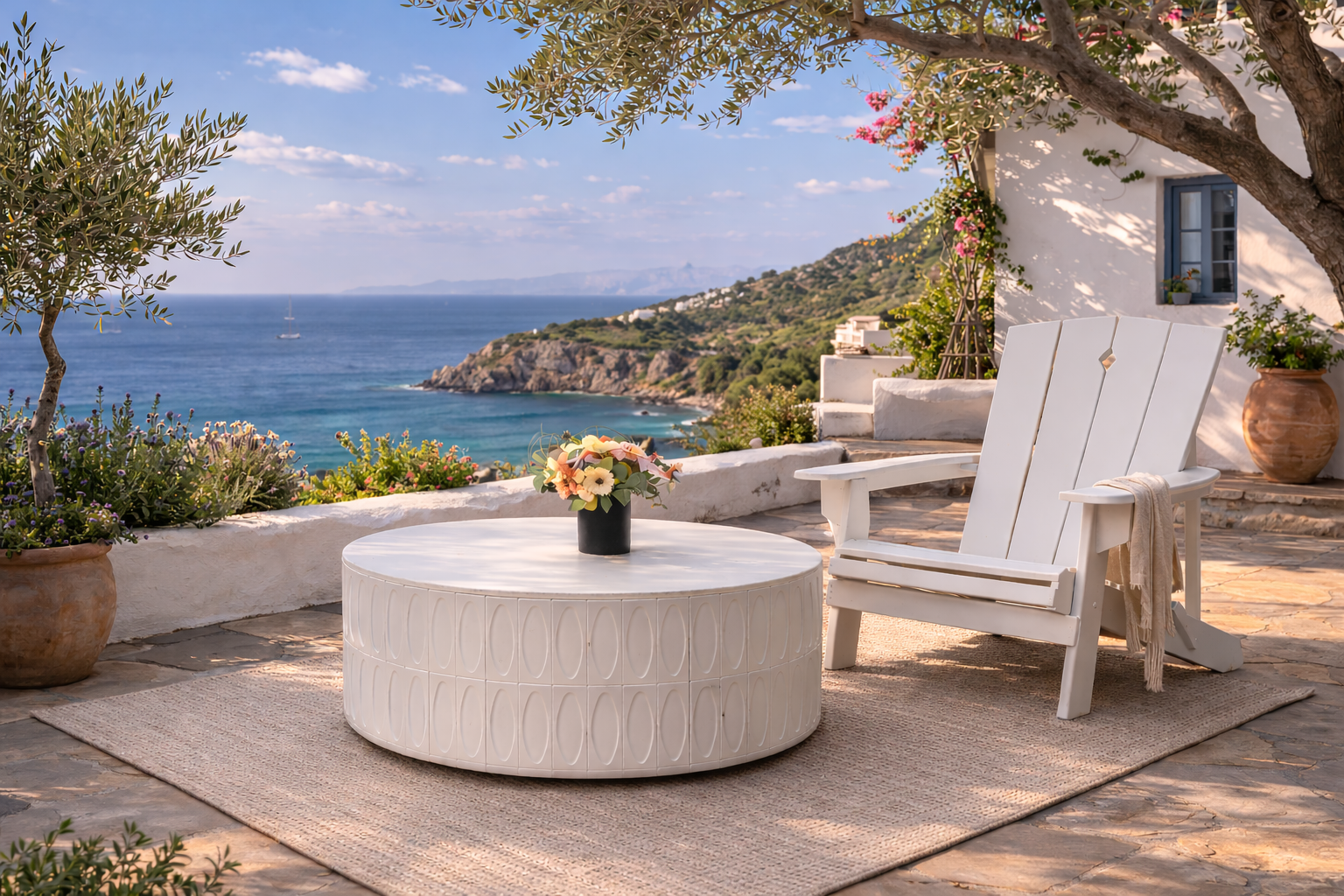
Outdoor concrete furniture is widely used in residential, hospitality, and commercial projects because concrete is a stable material with strong compressive performance, solid surface character, and good long-term suitability for exterior environments. When properly designed, finished, and sealed, it can perform well in rain, sun, and humid conditions.
Concrete is used outdoors because it offers several practical advantages:
These properties make it well suited to:
For outdoor furniture, this means a material that can keep its shape, maintain its visual presence, and perform consistently under repeated weather exposure.
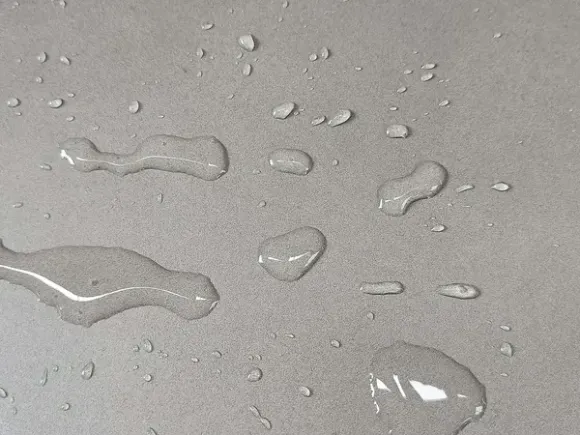
Rain affects outdoor furniture through surface wetting, moisture exposure, and repeated wet-dry cycles.
Concrete is generally more stable in these conditions than materials that may swell, rot, or distort. In outdoor furniture, long-term rain performance depends on several factors, including:
With the right production approach, outdoor concrete furniture can handle regular rain exposure while maintaining surface integrity and structural reliability. Sealing is especially important because it helps reduce water penetration and supports easier maintenance over time.
Sun exposure affects furniture through UV radiation, surface heating, and long-term weathering.
Many outdoor materials show visible change under strong sunlight. Depending on the material, this may include fading, brittleness, drying, or surface breakdown.
Concrete performs differently. Its mineral character, mass, and natural color range make it well suited to outdoor environments with regular sunlight. In practice, sun performance depends on:
This is one reason outdoor concrete tables and seating are often used in open-air spaces where visual stability matters.
Humidity affects outdoor materials through constant moisture in the air, especially in tropical, coastal, and high-humidity regions.
Some materials respond by swelling, shifting, softening, or aging unevenly. Concrete is generally more dimensionally stable in humid conditions, which is one reason it is widely used in exterior architecture and landscape applications.
For outdoor furniture, humidity performance depends on:
This is why concrete outdoor furniture is often specified for projects where humidity is part of the normal climate, not just an occasional condition.
Yes, when it is properly designed and manufactured.
It is more accurate to say that outdoor concrete furniture can offer strong weather resistance rather than claiming that it is unaffected by weather. Long-term performance depends on:
For B2B buyers, this is the right way to evaluate outdoor performance: not only by material type, but by the full production approach behind it.
At Smart Concrete, we approach outdoor concrete furniture as a balance of performance, usability, and design.
A successful piece is not defined by appearance alone. It also needs to make technical sense for real use. That means considering:
Our production approach focuses on:
Many outdoor projects require more than standard sizes and standard finishes.
At Smart Concrete, we support customization for:
Each design is reviewed with both visual intent and technical feasibility in mind. This helps ensure that the final piece is aligned with the project concept while also remaining suitable for production, handling, installation, and long-term outdoor use.
Buyers choose Smart Concrete when they need more than a decorative outdoor product. They need a supplier that understands how outdoor furniture is actually specified, used, and evaluated.
That includes attention to:
Our outdoor concrete furniture is suitable for:
If you are planning an outdoor project, Smart Concrete welcomes inquiries related to:
Contact Smart Concrete to discuss the right outdoor concrete solution for your project.
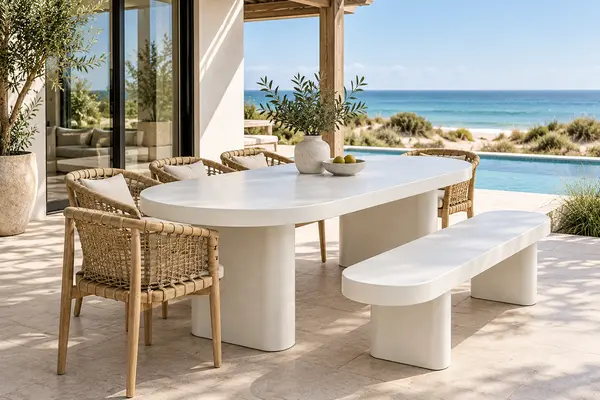
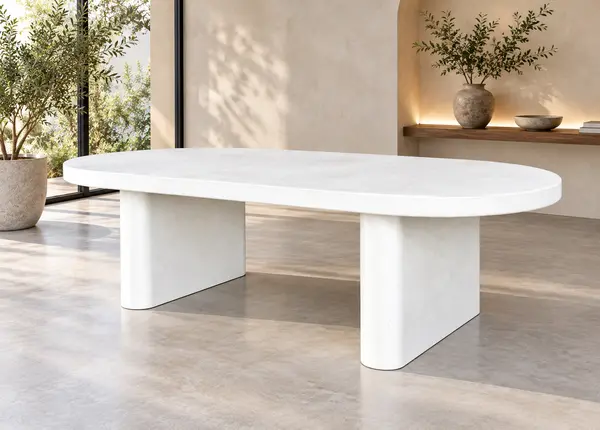
Naxos Collection Dining table - Outdoor Concrete Dining Table
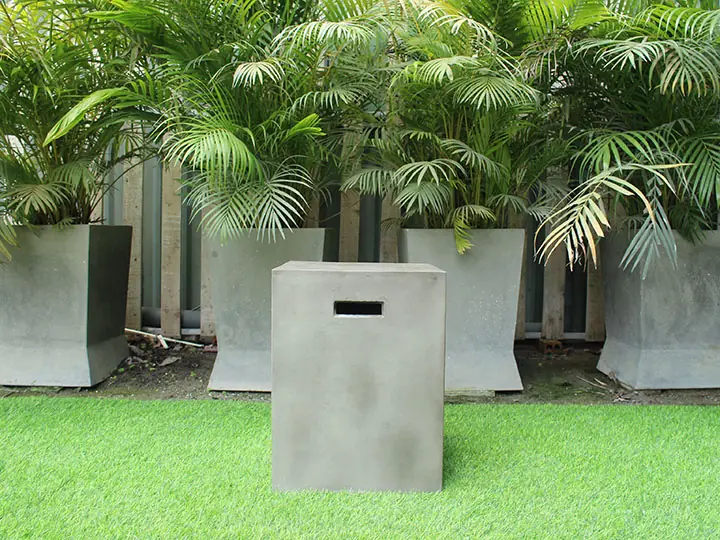
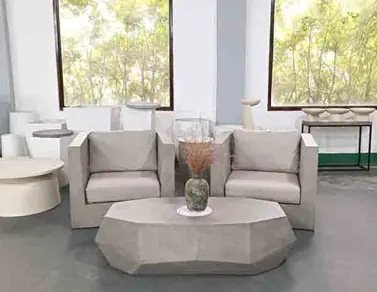
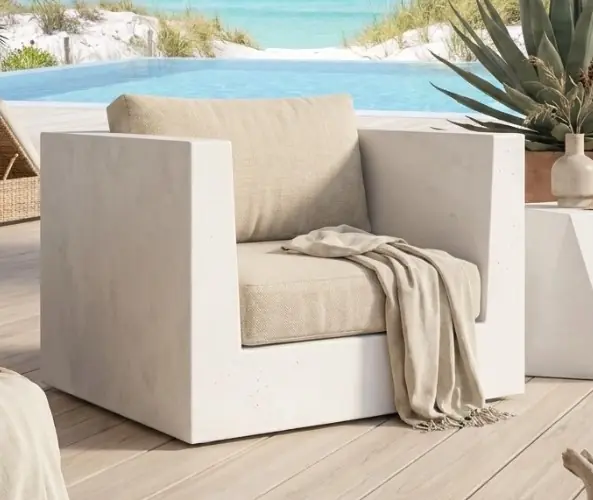
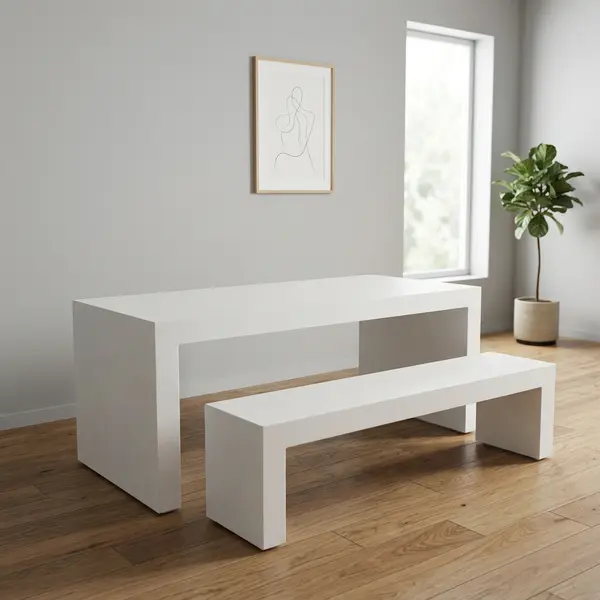
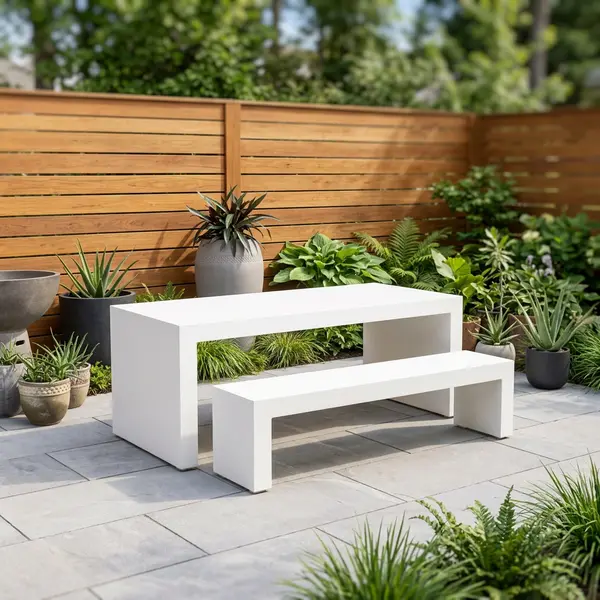
Waterfall Concrete Dining Table & Bench Set for Modern Outdoor and Indoor Living
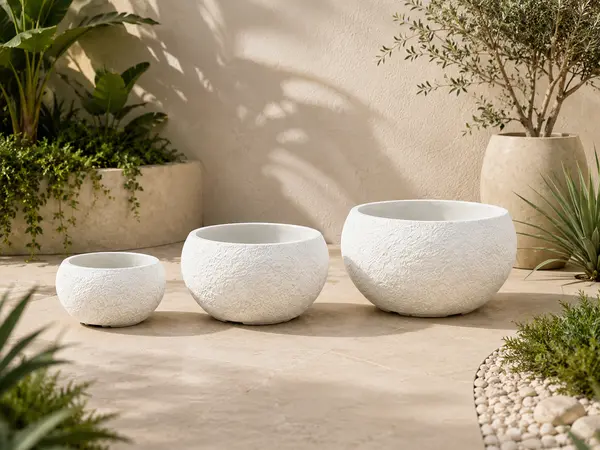
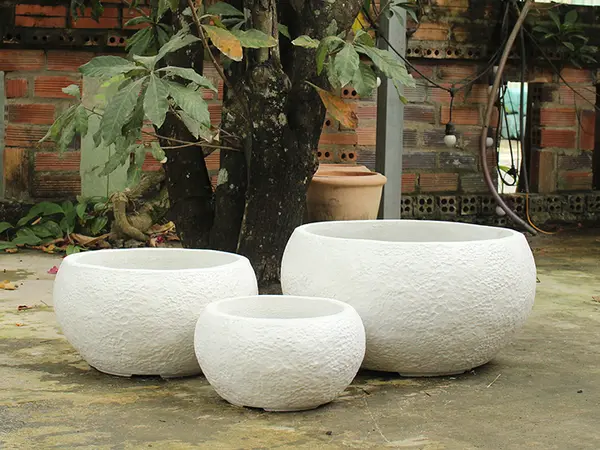
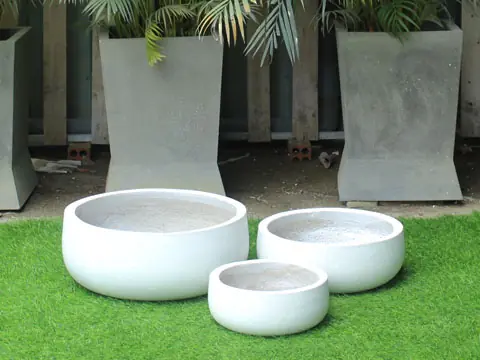
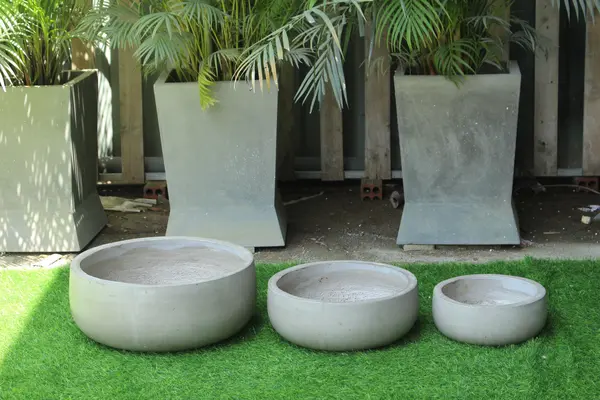
Set of 3 Round Pot Concrete with Antique Design | Fiber Concrete Planters